
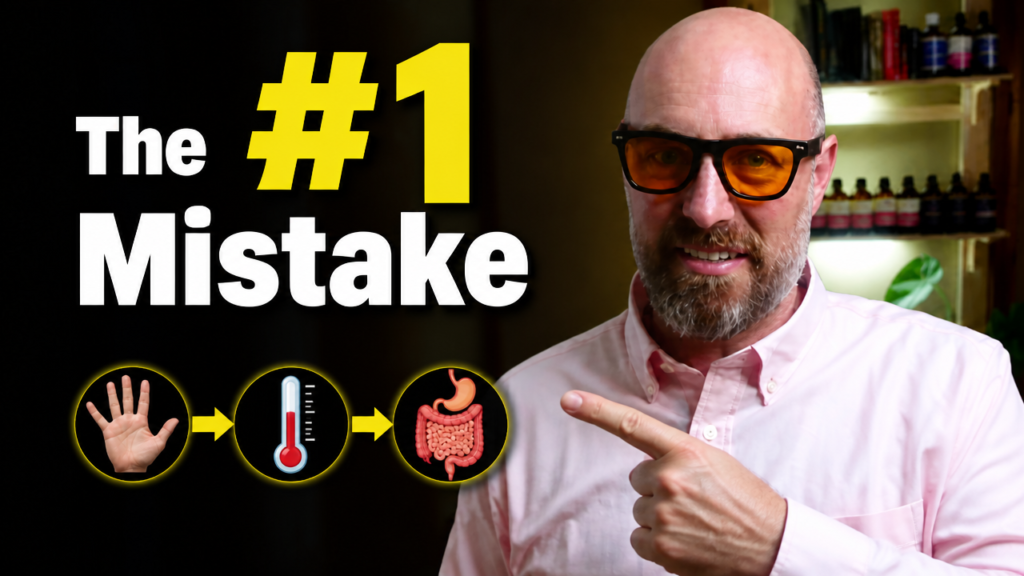
If your child has a steroid cream for eczema, an antihistamine for hay fever and a referral for stomach aches that never quite resolve, you’re not alone. I see this pattern constantly in my clinic, and I lived it myself with my own children when they were babies. What I wish I’d understood back then is that these are rarely three separate conditions. More often, they’re three expressions of the same underlying imbalance.
Why the cream works, then stops working
Parents often tell me: “The cream helps, but it always comes back.” That’s because a corticosteroid quiets the skin without addressing what’s driving the reaction. Think of symptoms as the body asking for help. Suppress one outlet and the pressure doesn’t disappear – it finds another route. A child’s eczema calms down, and suddenly the tummy aches worsen or a mild seasonal sniffle becomes year-round congestion.
The conventional model tends to send these children to three specialists: a dermatologist, a gastroenterologist and an immunologist, each with their own prescription. I’d rather zoom out and ask what the whole body is saying.
The barrier hypothesis: the body’s security gate
The skin, the gut lining and the respiratory tract all share a job. They’re selective barriers – letting in nutrients and water while keeping out pathogens, toxins and undigested food. When one barrier is compromised, the load shifts to the others.
This is where the gut–skin axis comes in. When the gut lining becomes inflamed and permeable (often called “leaky gut”), partially digested proteins can slip into the bloodstream. The immune system goes on high alert, and that low-grade systemic inflammation frequently shows up on the skin. The skin is sometimes called the “third kidney” – an extra route the body uses to offload what it can’t process internally.
The gut is also where roughly 70–80% of the immune system lives. When the microbiome is out of balance, the immune system loses its teacher. It can start reacting to harmless things – pollen, pet dander, dairy, gluten – as if they were threats.
Three signs worth raising with your practitioner
1. The food–mood link. Does your child become irritable, hyperactive or unusually flat after certain meals? That’s not just fussiness – it’s the gut–brain connection flagging inflammation.
2. Skin that moves and shifts. Do flare-ups change location or come and go with seasons or specific foods? Skin should be a quiet protective layer. When it joins the immune conversation, the gatekeeper is overwhelmed.
3. Lingering mucus. A permanently runny nose, throat clearing or snoring, even when your child isn’t sick, is an immune response trying to protect an irritated mucous membrane.
A holistic roadmap: healing from the inside out
Here’s how I approach these children in practice, built on three pillars.
1. The herbal toolbox
Herbs rarely do just one thing, and that’s their strength. I typically look for three actions:
- Demulcents such as marshmallow root and slippery elm contain mucilage that coats and soothes an inflamed gut lining, reducing the leak of food particles that trigger skin reactions.
- Alteratives like burdock root and red clover support the liver, kidneys and lymphatics, easing the body’s urge to push toxins out through the skin.
- Carminatives such as chamomile and lemon balm calm the nervous system, relieve gut spasm and support digestion. A calm gut absorbs nutrients properly.
2. Audit micronutrient status
Nutritional gaps quietly drive this cycle. Key players include:
- Quercetin (onions, apples, berries) – a natural mast cell stabiliser that helps settle allergic responses.
- Vitamin B5 (pantothenic acid) – supports adrenal function and skin cell energy.
- Omega-3 fatty acids – most children eat far too many pro-inflammatory omega-6 vegetable oils. Cutting those back and increasing quality EPA/DHA helps rebalance.
3. Rebuild the microbiome: weed, seed, feed
- Weed: gently shift inflammatory overgrowth using natural antimicrobials such as garlic or oregano (chosen carefully for children) rather than reaching straight for antibiotics.
- Seed: reintroduce beneficial organisms with probiotic foods.
- Feed: nourish them with prebiotic fibres from root vegetables, globe and Jerusalem artichoke.
Food as information, not just fuel
Many children reacting to foods aren’t truly allergic – their immune system is simply overwhelmed. Removing high-inflammatory triggers for a period (sugar, processed grains, A1 casein dairy) gives the system a chance to reset. Once calm, many of those foods can often be reintroduced.
A final word to overwhelmed parents
Modern parenting can feel like a minefield of conflicting health advice. Step back, breathe, and look at the whole picture. Your child isn’t broken. Eczema is a plea for systemic support, allergies are a call for immune education, and gut issues are a message about the microbiome and digestion.
Come back to the foundations: clean filtered water, nutrient-dense food, time playing in soil and fewer synthetic chemical exposures. It isn’t always the quick path, but it builds health that lasts. And it’s only the beginning of what’s possible for your child.