
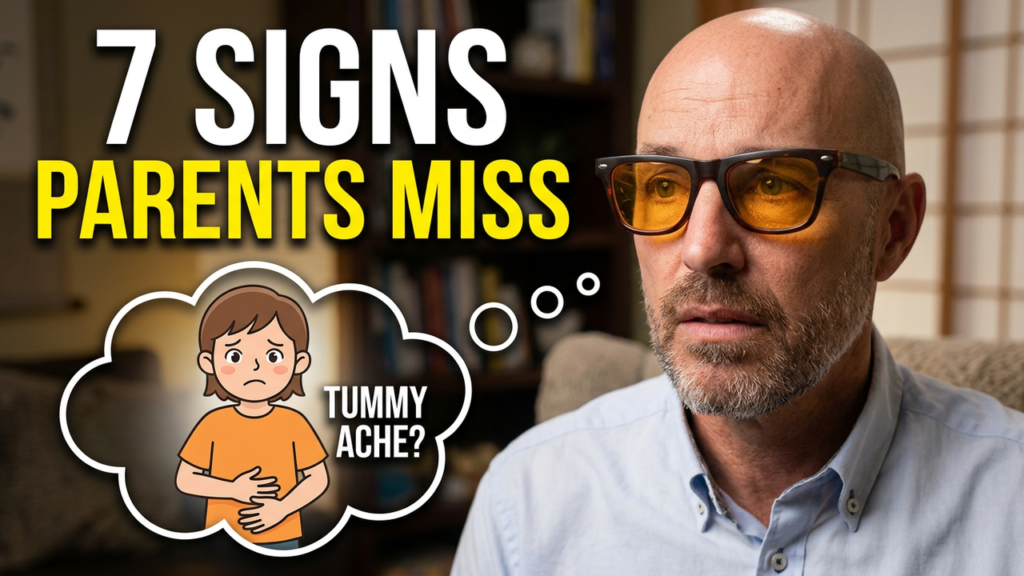
A child does not always say, “I’m worried.” Sometimes anxiety is easier to spot in their routines, behaviour or physical complaints than in their words. A tummy ache before school, repeated night-time waking or an unusually short temper can all be clues that something is troubling them.
These signs do not prove that a child has an anxiety disorder. Many have ordinary worries as they grow, and the same changes can have other causes. But noticing patterns—and gently asking what is going on—can help parents understand when a child may need extra support.
What anxiety can look like in children
Anxiety is a normal response to uncertainty or stress. It becomes more concerning when it is intense, continues or worsens, or gets in the way of everyday life, such as school, family activities, friendships or things a child usually enjoys. The NHS notes that children may not always understand or be able to explain what they are feeling, particularly when they are young.
Here are seven signs worth noticing.
1. Frequent tummy aches or feeling unwell
Some children report stomach discomfort around a predictable worry, such as school mornings or an event that feels daunting. Take the complaint seriously: the discomfort is real, even if stress might be one factor. Do not assume anxiety is the cause, especially if symptoms are severe, persistent or accompanied by other health concerns; speak with a health professional when you are unsure.
The brain and digestive system interact, and stress can affect how the body feels. That does not mean every tummy ache is caused by anxiety, or that a physical symptom should be dismissed as “just nerves.”
2. Settled sleep becomes difficult
A child who struggles to fall asleep, wakes during the night or seeks more comfort at bedtime may be feeling unsettled. Sleep changes can have many explanations, but when they appear alongside worries or other changes in behaviour, they are useful context to notice.
3. More meltdowns or irritability
Anxiety does not always look like quiet worry. Some children become tearful, snappy or easily overwhelmed, particularly when they cannot put their feelings into words. Try to look beyond the moment’s behaviour and consider whether a recurring situation or change is making things feel difficult.
4. Changes in appetite or eating
Eating noticeably more or less than usual can be one sign that a child is under strain. It is not specific to anxiety, so consider the wider picture rather than drawing conclusions from one meal or a short-lived change.
5. Clinginess and repeated reassurance-seeking
A child may want to stay close, find separation harder than usual, or ask the same worried question repeatedly. Some separation anxiety is a normal developmental stage in younger children. What matters is the child’s age, the pattern over time and whether it is stopping them from managing everyday activities.
6. Trouble concentrating or daydreaming
Worry can make it harder to focus on lessons, instructions or play. A child who seems distracted may be thinking about something that feels unsafe or uncertain to them. Concentration difficulties have many possible causes, so treat them as a reason to get curious, not as a diagnosis.
7. Headaches or other unexplained discomfort
Some children describe headaches or generally feeling unwell when they are worried. As with tummy aches, physical symptoms deserve care and should not automatically be attributed to anxiety. Keep track of when they happen and discuss persistent or concerning symptoms with a GP or other appropriate health professional.
How to support an anxious child
Start with calm curiosity. Choose a moment when neither of you is rushed and ask an open question, such as, “I’ve noticed bedtime has felt harder lately. What’s on your mind?” Listen without dismissing the worry or immediately trying to talk the child out of it. Reassure them that it is okay to talk about difficult feelings.
Look for patterns together: when the symptoms happen, what is going on beforehand, and what seems to help. If a worry is linked to school, the NHS suggests working with the child and school to identify possible solutions. Predictable routines can also feel reassuring; where possible, prepare children in advance for changes.
Try not to force a child into a stressful situation without first exploring what is making it hard. Support should be kind and practical, while helping the child take manageable steps rather than allowing worry to quietly shrink their world.
When to seek help for anxiety in children
Consider speaking with your child’s GP if anxiety is not improving, is getting worse, self-help is not enough, or it is affecting school, family life or friendships. A GP can discuss what may be contributing and what support is appropriate. You can also talk with the school about support your child may need.
If your child’s physical symptoms are persistent, severe or worrying, seek medical advice rather than assuming anxiety is the explanation. If you believe they may be in immediate danger, contact emergency services.
A final thought for parents
A child’s behaviour or physical complaints can be an important signal, but no single sign tells the whole story. Notice changes, ask gently and take your child’s concerns seriously. Getting advice is not overreacting; it is a way to understand what your child needs.
More Reading
NHS, Anxiety disorders in children — signs to look out for and when to seek professional help.
NHS, Anxiety in children — age-related worries, ways to help and getting support.
This article is for general information and is not a substitute for medical advice.